

 Reboot and Revive





 Comments (4)



Recipes
Delicious, gut-friendly meals designed to reduce inflammation and support your health—just pick your dish and enjoy the benefits.
Recipes
From your account dashboard you can view your recent orders, manage your shipping and billing addresses, and edit your password and account details...
Please log in to view this section.
Please log in to view this section.
Please log in to view this section.
Please log in to view this section.
Please log in to view this section.
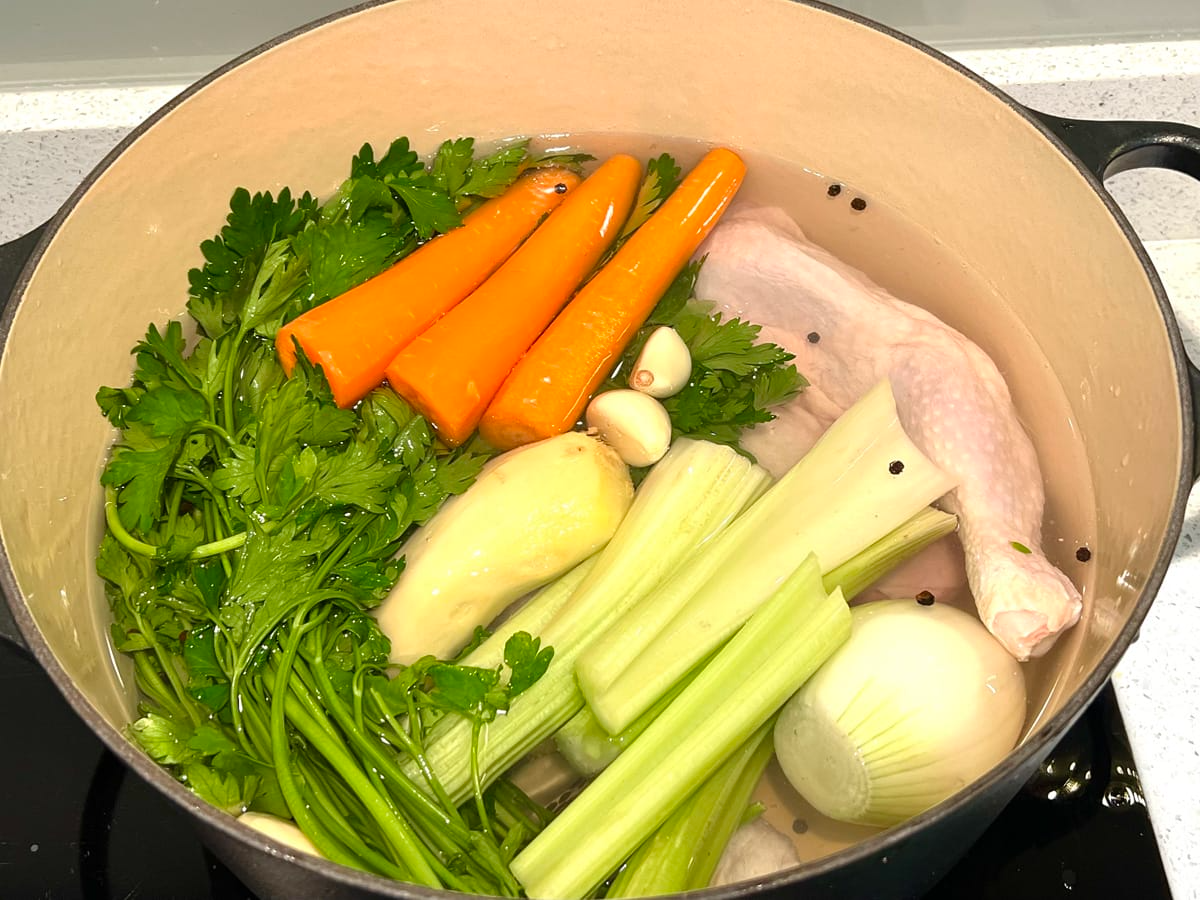
If you’ve prepared our Immune Boosting Chicken Soup, chances are you have leftover chicken bones. Instead of discarding them, this recipe shows you a simple, nourishing way to put them to good use. Making chicken bone broth is one of the most economical and nutrient-dense habits you can build into your kitchen routine.
While bone broth may be trending now, it’s far from new. Its origins date back over 2,500 years, when it was used in Chinese medicine to support kidney health, digestion, and overall vitality. Since then, bone broth has been valued across cultures, from traditional European kitchens to Asian healing practices, for both its culinary depth and restorative properties, a big part of why this chicken bone broth soup has stayed popular for centuries.
So what’s the difference between stock and bone broth? Stock is typically simmered for a shorter time and is made mainly for flavor. Bone broth, on the other hand, is simmered gently for much longer. This recipe takes 6 to 8 hours on low heat, allowing minerals, amino acids, and collagen to slowly extract from the bones. A longer cooking process gives chicken bone broth its richer body and potential digestive and immune-supporting benefits, which is part of the larger chicken bone broth health picture people are increasingly curious about.
For another comforting chicken recipe, try our Asian Chicken Soup, a simple and nourishing option for your recipe rotation.
Chicken bone broth is naturally warming, easy to digest, and deeply nourishing. It can be sipped on its own, used as a base for soups and stews, or added to vegetables and other savory dishes for extra flavor and nourishment. Drinking chicken broth regularly, as part of a broader chicken broth diet, is a gentle, slow-simmering habit worth building. Bringing the broth to a light simmer and keeping the heat low helps preserve nutrients while creating a deeply flavored, versatile staple that supports everyday health.
Delicious, gut-friendly meals designed to reduce inflammation and support your health—just pick your dish and enjoy the benefits.
Recipes


Recipes
01The EBS Traffic Light system of food categories with more guidance on each color.
Read the guide

Food lists
02
Expert advice
03A place for asking questions that might feel too big or too small for professional help, and getting responses from both peers and moderators.
Forum access

Forum
04
Delicious, gut-friendly meals designed to reduce inflammation and support your health—just pick your dish and enjoy the benefits.
Recipes
The EBS Traffic Light system of food categories with more guidance on each color.
Read the guide
A place for asking questions that might feel too big or too small for professional help, and getting responses from both peers and moderators.
Forum access










Lara - EBS
Beef bones are much denser so yes a longer simmering time would be recommended.
02/09/26Lara - EBS
Absolutely. A slow cooker on LOW typically holds food at around 85–95°C, which is perfect for bone broth.
02/09/26Nalini Malhotra
Also, there is confusing information in the benefits of bome broth. Is the 12 - 24 hours simmering only for beef or chicken too please?
02/08/26Nalini Malhotra
At step 3, could you transfer this to a slow cooker and heat on low for 6 - 8 hours or is low in a slow cooker not hot enough please?
02/08/26